
Burnout. Money. Time. These are just a few of the reasons people give up on their bullet journals. So many people start planning with great intentions but there are many planning pitfalls. Planning is definitely important, so sticking with it is essential. Here is a list of some of the most common reasons this happens and solutions to help.
#1 – I don’t have time
Most people who think they don’t have the time to start a planner just don’t have time for a complicated bullet journal system. If you’re busy, try using a simpler system such as a weekly and monthly layout. Planning doesn’t have to be complicated, but even a simple plan helps you stay on track. Set a specific time to plan out your week so that you don’t continually put it off. Intentionality is super important when you’re busy, so make sure you set aside time specifically to plan.
#2 – I’m not organized
A popular assumption is that in order to keep a planner, you need to have the mental capacity and personality able to plan every detail of your life. You don’t. For most people, having an extremely detailed planner is not helpful (if you’re one of the people that need detailed planners though, that’s great!). Your planner is a tool for you to use, not something to control you and make you feel bad.
#3 – I don’t have the money
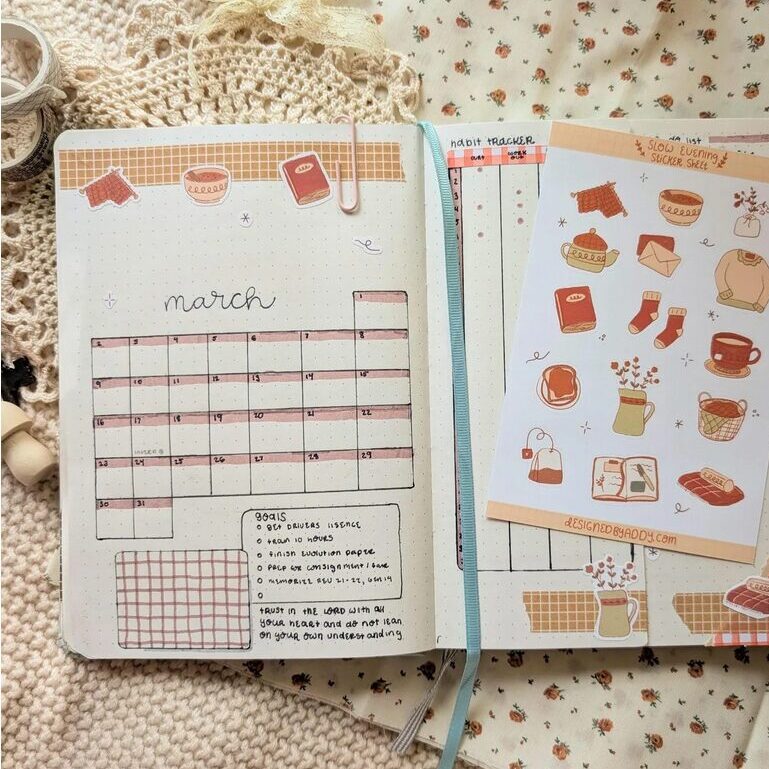
If you can’t afford an expensive bullet journal, there are simple bullet journals out there that are high quality. Don’t feel like you need to get anything fancy, especially if you’re just starting out. Additionally, consider getting maybe one or two pens dedicated for use for your planner. Sticker sheets can also go a long way in making your planner more cheerful, fun to use, and put together, and they are often very inexpensive (you can find some in my shop or from other artists). Find creative and inexpensive ways to decorate your planner pages (I’ve used cutouts from magazines and pages from old books). Don’t be afraid to get an inexpensive setup and upgrade when you can afford it.
#4 – I’m not artistic
Maybe you’ve seen those beautiful bullet journal layouts on Pinterest and think that all your planner pages need to look like that. But here’s a little secret – functionality is more important than pretty. If you have the time to learn the skills to make it beautiful, that’s amazing! But if you don’t, having a functional, boring planner is better than none at all. And if you have the money, you can get a nicer planner that already looks cool. Also, using stickers and washi tape to decorate your planner is super easy and makes it look instantly better.
#5 – I never stick with it
This is one of the most common planning pitfalls. Finding a planner that works with how your brain works is essential. You can have the most impressive planner or layout in the world and still not stick with it because it doesn’t work for you. You will need to understand whether a detailed daily planner or a simpler weekly planner will work best for you. This may take some trial and error, but it is worth it to find the right planner for you.
#6 – I don’t like how my planner looks
Looking at other people’s planner layouts can be helpful for inspiration, but comparison can kill your motivation to plan, so it is important to be very careful not to fall into that trap. Most people posting their bullet journal and planner layouts have had a lot of practice, and many even make a living from it, so it is not fair to compare yours to theirs. On the other hand, if it motivates you to learn how to get better and improve, that’s great. Just make sure you are actually acting on that motivation. The most important thing to remember is that if your planner works for you, it doesn’t matter how it looks compared to others.
#7 – I keep getting burnt out
The fatigue is real, so learn how to stick with it without getting burnt out. Often people get in too deep by creating elaborate layouts, but if you won’t be able to manage doing that consistently, make sure you don’t get in over your head. Also, if you do have burnout, it is perfectly fine to take a break. There is a line between procrastination and prioritizing the most important things, but don’t be afraid to only create basic spreads for a month or two (or more) if you need to.
Most people face challenges when planning and using bullet journals, but there are also helpful solutions to overcome them. Hopefully you found some encouraging tips in this list! Do you have any advice for overcoming planning pitfalls? Did I miss any that you would like me to cover? Let me know in the comments!
Leave a Reply